
Diabetes is one of the most common chronic health conditions worldwide. Many people live with diabetes for months or even years without realizing it because the early symptoms can be mild and easy to overlook.
Recognizing the warning signs early can help you seek treatment sooner, reduce the risk of complications, and maintain a healthier lifestyle.
What Is Diabetes?
Diabetes is a condition that affects how your body uses glucose (blood sugar). Normally, insulin helps move glucose from your bloodstream into your body’s cells to be used for energy. When your body doesn’t produce enough insulin or cannot use it properly, blood sugar levels rise.
Over time, high blood sugar can damage your heart, kidneys, eyes, nerves, and blood vessels if left untreated.
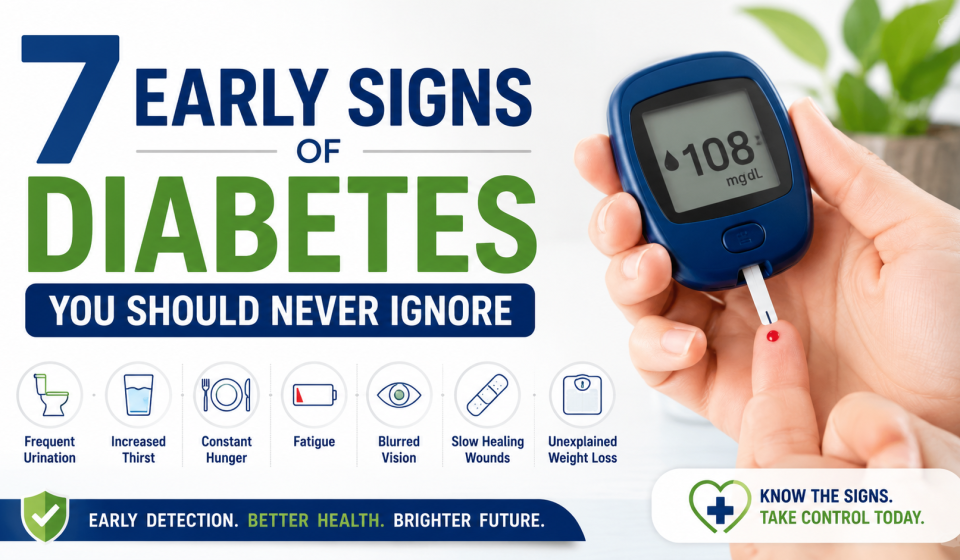
7 Early Signs of Diabetes
1. Frequent Urination
If you find yourself visiting the toilet more often than usual, especially during the night, it may be a sign of high blood sugar. Your kidneys work harder to remove excess glucose, leading to increased urination.
2. Increased Thirst
Losing more fluids through frequent urination can make you feel constantly thirsty, even if you’re drinking plenty of water.
3. Constant Hunger
Despite eating regular meals, people with diabetes may continue to feel hungry because their body is unable to use glucose effectively for energy.
4. Unexplained Weight Loss
Sudden weight loss without changes to your diet or exercise routine can occur because the body starts using muscle and fat for energy instead of glucose.
5. Feeling Tired All the Time
When your body’s cells cannot absorb glucose properly, they don’t receive enough energy. This often causes ongoing fatigue and low energy levels.
6. Blurred Vision
High blood sugar levels can affect the tiny blood vessels in your eyes, leading to temporary blurred vision.
7. Slow-Healing Wounds
Cuts, scratches, and wounds that take longer than usual to heal may be an early sign of diabetes. High blood sugar can reduce blood circulation and slow the body’s natural healing process.
Who Is at Higher Risk?
You may have a higher risk of developing diabetes if you:
- Have a family history of diabetes
- Are overweight or obese
- Are physically inactive
- Have high blood pressure or high cholesterol
- Are over 40 years old
- Have had gestational diabetes during pregnancy
How Is Diabetes Diagnosed?
A doctor may recommend blood tests such as:
- Fasting Blood Sugar (FBS)
- HbA1c Test
- Random Blood Sugar Test
- Oral Glucose Tolerance Test (OGTT)
Early testing helps detect diabetes before serious complications develop.
Can Diabetes Be Prevented?
While not all cases can be prevented, healthy lifestyle habits can significantly reduce your risk.
Simple steps include:
- Eating a balanced diet
- Exercising regularly
- Maintaining a healthy weight
- Limiting sugary foods and drinks
- Getting regular health screenings
- Managing stress and getting enough sleep
When Should You See a Doctor?
If you experience one or more of these symptoms for several weeks, it’s important to schedule a medical check-up. Early diagnosis allows treatment to begin sooner and helps prevent long-term health problems.
Frequently Asked Questions
Is diabetes curable?
There is currently no cure for diabetes, but it can be managed effectively through medication, healthy lifestyle choices, and regular monitoring.
How often should I check my blood sugar?
Your doctor will recommend the right testing schedule based on your health condition and risk factors.
Can young adults develop diabetes?
Yes. Type 2 diabetes is becoming more common among younger adults due to sedentary lifestyles and unhealthy eating habits.
The early signs of diabetes are often subtle, but recognizing them can make a significant difference to your long-term health. Regular health screenings and timely medical advice are the best ways to detect diabetes early and manage it effectively.
Don’t ignore persistent symptoms. Looking after your health today can help prevent serious complications in the future.
Need a Diabetes Screening?
If you’re experiencing symptoms or have risk factors for diabetes, consider booking a health screening. Early detection allows you to take control of your health before complications arise.