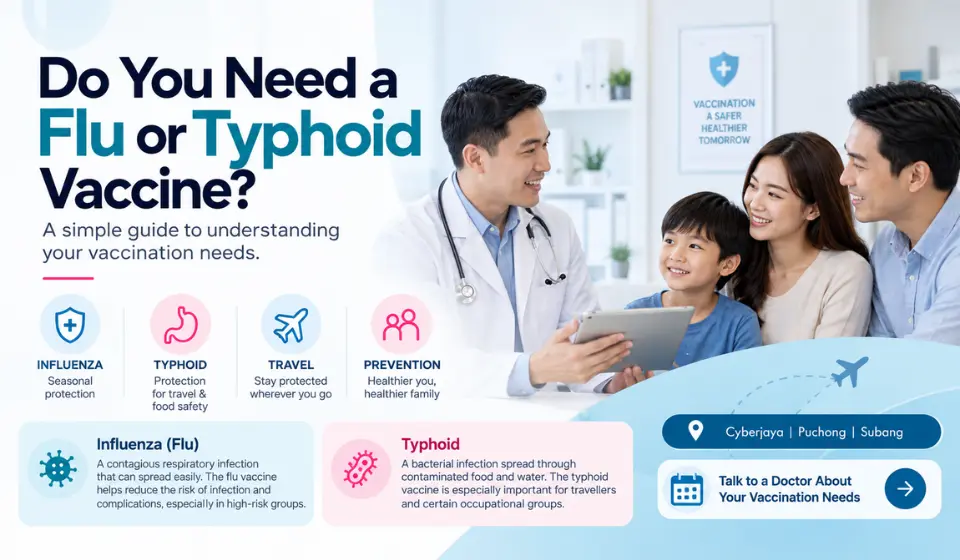

Vaccination is one of the simplest ways to reduce the risk of certain preventable infections. But with so many vaccines available, it is normal to wonder:
“Which vaccines do I actually need?”
For some people, an influenza vaccination may be an important part of yearly preventive care. For others, a typhoid vaccination may be particularly relevant because of work, travel or exposure risk.
The important thing is that vaccination needs are not exactly the same for everyone.
Your age, health, occupation, travel plans, previous vaccinations and individual risk factors can all influence which vaccines may be appropriate for you.
If you are looking for an influenza vaccination in Cyberjaya, or wondering whether you should consider a typhoid vaccine, this guide can help you understand the basics before speaking with a healthcare professional.
Quick Answer: Do You Need an Influenza or Typhoid Vaccine?
It depends on your individual situation.
Influenza vaccination is commonly considered as part of annual preventive healthcare. Malaysia’s Ministry of Health states that annual influenza vaccination is the best way to prevent influenza infection for individuals aged 6 months and above, and explains that the vaccine formulation is updated because influenza viruses continually change.
Typhoid vaccination may be particularly relevant for people travelling to areas where typhoid is common, certain occupational groups such as food handlers, and other people whose healthcare provider considers them to have meaningful exposure risk. WHO’s 2026 position paper also recommends typhoid vaccination as part of a broader strategy for controlling typhoid fever.
The best approach is not to choose a vaccine simply because it is available. Instead, discuss your individual circumstances with a doctor or qualified healthcare professional.
What Is Influenza?
Influenza, commonly called flu, is a contagious respiratory illness caused by influenza viruses.
It can spread from one person to another through respiratory droplets when an infected person coughs, sneezes or talks. Contaminated surfaces can also play a role in transmission.
Common symptoms may include:
- Fever
- Cough
- Sore throat
- Runny or blocked nose
- Headache
- Body aches
- Tiredness or weakness
- Loss of appetite
Some people may also experience vomiting or diarrhoea, particularly children.
For many healthy people, influenza may cause a short-term illness. However, certain groups have a higher risk of developing complications.
Why Consider Influenza Vaccination?
An influenza vaccine helps prepare the immune system to recognise influenza viruses.
Malaysia’s Ministry of Health recommends annual influenza vaccination as an important preventive measure and notes that the vaccine formulation needs to be updated because influenza viruses change over time.
Current international guidance also recommends annual influenza vaccination for people aged 6 months and older who do not have contraindications.
Why is it needed every year?
There are two important reasons.
First, protection can decrease over time.
Second, influenza viruses continue to change.
As a result, vaccine formulations are reviewed and updated to better match the influenza viruses expected to circulate.
This is why an influenza vaccination is not generally viewed as a one-time vaccine.
Who May Benefit From Influenza Vaccination?
Influenza vaccination may be particularly important for people who have a higher risk of complications.
These can include:
Young children
Children, particularly those under 5 years old, can be more vulnerable to complications from influenza.
Older adults
Older adults, especially those aged 65 and above, are among the groups considered at higher risk of serious influenza complications.
Pregnant women
Pregnancy can change the body’s immune system and increase the risk associated with some infections. Vaccination decisions during pregnancy should be discussed with a healthcare professional.
People with chronic health conditions
People living with conditions such as diabetes, asthma, heart disease or other chronic illnesses may have a higher risk of complications from influenza.
People who regularly interact with others
If your work involves frequent interaction with customers, children, patients or large groups of people, discussing annual influenza vaccination with your healthcare provider may be worthwhile.
What Is Typhoid?
Typhoid fever is a bacterial infection caused by Salmonella Typhi.
It is mainly associated with contaminated food and water and remains an important public health concern in many parts of the world.
Vaccination can help reduce the risk of typhoid, but it does not replace safe food and water practices.
This is especially important for travellers visiting areas where typhoid is more common.
Who May Need a Typhoid Vaccine?
Unlike influenza vaccination, typhoid vaccination is not simply an annual vaccine that everyone should automatically receive.
Whether you should consider it depends on your circumstances.
1. Travellers
If you are travelling to an area where typhoid is common, a healthcare professional may recommend vaccination before your trip.
The CDC currently recommends that travellers to areas where typhoid is common consider vaccination and continue practising safe food and drinking habits.
If you are planning international travel, it is better to discuss vaccination before you leave, rather than waiting until you arrive at your destination.
2. Food handlers
Typhoid vaccination is particularly relevant to food safety in Malaysia.
The Malaysian Ministry of Health’s 2024 Annual Report states that food handlers are required to undergo accredited Food Handler Training and obtain anti-typhoid vaccination.
If you work in food preparation or food service, check that your vaccination and training requirements are up to date.
3. People with specific exposure risks
Your doctor may also consider typhoid vaccination based on your travel history, occupation, exposure risk and other individual circumstances.
WHO’s updated 2026 position paper notes that typhoid vaccination strategies should be considered alongside measures such as safe water, sanitation, hygiene and food safety.
Influenza vs Typhoid Vaccination: What’s the Difference?
| Influenza Vaccination | Typhoid Vaccination | |
|---|---|---|
| Protects against | Influenza viruses | Salmonella Typhi |
| Main infection type | Respiratory illness | Bacterial intestinal infection |
| Common reason for vaccination | Annual preventive care | Travel, occupation or specific risk |
| Usually repeated? | Generally annually | Depends on vaccine type and individual risk |
| Travel relevance | May be useful depending on destination and circumstances | Often considered for travel to typhoid-risk areas |
| Food safety still important? | Not directly related | Yes |
| Medical assessment useful? | Yes | Yes |
The exact vaccine type, schedule and timing should be confirmed with a healthcare professional because recommendations can vary by age, health status, destination and vaccine product.
Do You Need Both Influenza and Typhoid Vaccines?
Not necessarily.
They protect against different infections and are recommended for different reasons.
For example:
You may consider influenza vaccination if:
- You want annual protection against influenza
- You have young children or older family members
- You have certain chronic health conditions
- You have frequent contact with other people
- Your doctor recommends it based on your circumstances
You may consider typhoid vaccination if:
- You are travelling to a typhoid-risk destination
- You are a food handler and vaccination is required for your role
- You have another recognised exposure risk
- Your doctor recommends vaccination based on your circumstances
Some people may appropriately receive both, but that does not mean everyone needs both.
Vaccination Does Not Mean You Can Ignore Other Prevention Measures
This is particularly important for typhoid.
Typhoid vaccines are not 100% effective, so vaccination should be combined with safe food and water habits.
When travelling, practical precautions include:
- Wash your hands regularly.
- Drink safe water.
- Choose properly cooked food.
- Be careful with raw foods.
- Avoid questionable food and drinks.
- Follow local food safety advice.
Similarly, influenza prevention includes good respiratory hygiene, handwashing, avoiding close contact when unwell and staying home when you have symptoms.
Can You Get Influenza and Typhoid Vaccination at the Same Time?
In some circumstances, different vaccines can be administered during the same healthcare visit.
However, whether this is appropriate for you depends on the specific vaccines, your age, medical history and other factors.
WHO’s 2026 typhoid position paper notes that TCV can be administered alongside other vaccines, with vaccines given at separate injection sites when administered concomitantly.
Rather than deciding yourself, tell your healthcare provider about any vaccines you have recently received and ask whether the vaccines you need can be given during the same visit.
When Should You Speak to a Doctor Before Vaccination?
Before receiving a vaccine, tell your doctor or vaccination provider if you:
- Have had a serious allergic reaction to a previous vaccine
- Have known allergies to vaccine ingredients
- Are pregnant or planning pregnancy
- Have a weakened immune system
- Have a significant medical condition
- Are currently unwell
- Take regular medicines
- Have recently received another vaccine
- Are travelling soon and need travel vaccination advice
Your healthcare provider can determine whether vaccination is suitable and which vaccine or schedule is appropriate.
What If You Are Already Feeling Unwell?
Vaccination is generally intended as a preventive measure, not as treatment for an active infection.
If you currently have symptoms such as:
- High or persistent fever
- Difficulty breathing
- Chest pain
- Severe weakness
- Confusion
- Dehydration
- Symptoms that are rapidly getting worse
seek medical assessment rather than assuming vaccination is the solution.
If you have influenza-like symptoms, a doctor can assess your condition and advise whether further testing or treatment is appropriate.
Where Can You Get Influenza Vaccination in Cyberjaya?
If you are searching online for an influenza vaccination clinic in Cyberjaya, it is helpful to choose a clinic where you can discuss your vaccination needs with a healthcare professional rather than simply booking a vaccine without context.
Qualitas SV Care Clinic Cyberjaya is located at Nadayu Square, Persiaran Bestari, Cyberjaya and operates 24 hours.
The clinic provides access to healthcare services where patients can discuss preventive care and vaccination needs with medical professionals.
Before visiting, it is sensible to confirm:
- Vaccine availability
- Suitable age group
- Whether an appointment is required
- Any preparation needed
- Your previous vaccination history
- Whether you need influenza, typhoid or another vaccine
Looking for Vaccination in Puchong or Subang Jaya?
If Cyberjaya is not convenient, residents around Puchong and Subang Jaya can also consider local healthcare facilities for vaccination and preventive healthcare.
When searching for a vaccination clinic in Puchong or vaccination clinic in Subang, look beyond distance alone.
A good vaccination visit should give you an opportunity to:
- Explain why you want the vaccine.
- Discuss your health and medical history.
- Review previous vaccinations.
- Ask questions about benefits and possible side effects.
- Understand whether you need future doses or boosters.
- Receive appropriate medical guidance.
This patient-first approach can help make vaccination part of a broader preventive healthcare plan rather than a one-off transaction.
How to Prepare for Your Vaccination Visit
You usually do not need complicated preparation for a routine vaccination appointment.
However, it can help to bring or know:
Your vaccination history
If you have a vaccination record, bring it with you.
Your travel plans
If you are travelling, tell the doctor:
- Destination
- Travel dates
- Length of stay
- Type of trip
Your medical history
Mention important health conditions, allergies and regular medicines.
Your previous vaccine reactions
Tell your healthcare provider if you have experienced a significant reaction after a previous vaccination.
Your questions
There is no need to feel embarrassed about asking questions.
You can ask:
“Do I actually need this vaccine?”
“How often do I need it?”
“Is it suitable for my age and health?”
“Do I need any other vaccines?”
“How far before travel should I get it?”
These are useful questions to ask before vaccination.
Vaccination Is About Prevention, Not Fear
It is easy to think about vaccination only when there is an outbreak, a trip coming up or someone in the family becomes sick.
But preventive healthcare works best when it is planned before there is a problem.
For some people, an annual influenza vaccine may be an appropriate part of their preventive care.
For others, typhoid vaccination may make sense because of travel, occupation or exposure risk.
And sometimes, the most appropriate answer may be that a particular vaccine is not currently needed.
That is why personalised medical advice matters.
The goal is not to get every vaccine available.
The goal is to understand which vaccinations are relevant to you.
What Can You Do Next?
If you are considering vaccination, start with three simple questions:
1. What is my risk?
Think about your age, health, occupation, travel and exposure.
2. What vaccination history do I have?
Check your previous vaccination records if available.
3. What should I discuss with my doctor?
Bring your questions and let a healthcare professional assess what is appropriate for you.
If you are looking for an influenza vaccination in Cyberjaya, or need advice about typhoid vaccination, a medical consultation can help you make an informed decision.
Quick Answer
Is influenza vaccination needed every year?
Influenza vaccination is generally recommended annually because protection decreases over time and influenza viruses continually change. Malaysia’s Ministry of Health specifically explains that influenza vaccine formulations are updated to better match expected circulating viruses.
Who can receive an influenza vaccine?
Malaysia’s Ministry of Health information states that annual influenza vaccination is available for individuals aged 6 months and above at many private healthcare facilities, while individual suitability should still be assessed by a healthcare professional.
Is typhoid vaccination necessary for everyone?
No. The need for typhoid vaccination depends on factors such as travel, occupation and exposure risk. WHO’s current guidance also recognises targeted indications, including professional food handlers in typhoid-endemic areas.
Do travellers need a typhoid vaccine?
Travellers to areas where typhoid is common may be advised to receive typhoid vaccination before travel. Safe food and water practices are still important after vaccination.
Can I have different vaccines during the same visit?
Some vaccines can be administered during the same visit, but this should be confirmed with your healthcare provider based on the specific vaccines and your circumstances. WHO’s 2026 typhoid guidance allows TCV to be co-administered with other vaccines.
Key Takeaways
- Influenza and typhoid are different infections, so their vaccines serve different purposes.
- Influenza vaccination is generally considered annually because influenza viruses change and protection decreases over time.
- Young children, older adults, pregnant women and people with certain chronic conditions may have a higher risk of influenza complications.
- Typhoid vaccination is particularly relevant for certain travellers and occupational groups, including food handlers.
- Typhoid vaccination does not replace safe food and water practices.
- Your vaccination needs depend on your age, health, occupation, travel plans and previous vaccination history.
- If you are unsure, speak with a healthcare professional before vaccination.
Frequently Asked Questions
1. Where can I get an influenza vaccination in Cyberjaya?
You can look for a healthcare clinic in Cyberjaya that provides influenza vaccination and medical consultation. Qualitas SV Care Clinic Cyberjaya 24 Hours is one local option in Cyberjaya. Check vaccine availability and suitability with the clinic before your visit.
2. How often should I get an influenza vaccine?
Influenza vaccination is generally taken annually. Malaysia’s Ministry of Health explains that influenza vaccine formulations are updated because influenza viruses change over time.
3. Is the flu vaccine only for older people?
No. Influenza vaccination can be appropriate for many age groups. Malaysia’s Ministry of Health states that annual influenza vaccination is available for people aged 6 months and above, while individual suitability should be assessed by a healthcare professional.
4. Who should consider typhoid vaccination?
People travelling to areas where typhoid is common and certain occupational groups, including food handlers, may need typhoid vaccination. Individual recommendations depend on circumstances.
5. Does typhoid vaccination completely prevent typhoid?
No vaccine provides a reason to ignore food and water precautions. Typhoid vaccines are not 100% effective, so safe food, water and hygiene practices remain important.
6. How long before travel should I get vaccinated?
The appropriate timing depends on the vaccine and your travel plans. Some typhoid vaccines need to be given before travel to allow time for protection to develop. Discuss your itinerary with a healthcare provider as early as possible.
7. Can children receive influenza vaccination?
Influenza vaccines are available for children from 6 months of age, although the appropriate product and dosing schedule can vary by age and vaccination history. Discuss this with your child’s healthcare provider.
8. Should I get vaccinated if I am pregnant?
Pregnancy can affect vaccination decisions, so speak with your doctor about which vaccines are appropriate for you and when they should be given.
9. Can I get vaccinated if I have a chronic health condition?
Many people with chronic health conditions can receive recommended vaccines, and vaccination may be particularly important because some chronic conditions can increase the risk of complications from infections. Your doctor can assess your individual situation.
10. Should I get both influenza and typhoid vaccines?
Not necessarily. They protect against different infections. Whether you need one or both depends on your health, age, occupation, travel plans and individual risk.